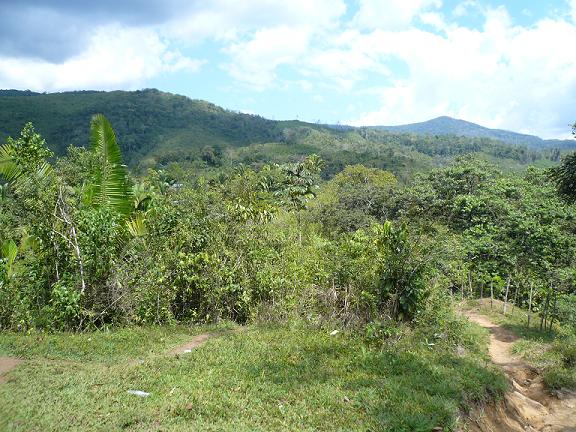
 REDD+ stands for Reducing Emissions from Deforestation and Forest Degradation. In simple terms the idea is that carbon emissions and global warming and climate change will slow if the world reduces the number of forests that are damaged or destroyed. (Standing forests act like a sponge, taking in carbon dioxide; cutting down or burning forests puts carbon dioxide back into the atmosphere and contributes to global warming.) Several international agencies are creating REDD+ programs to encourage developing countries to conserve their forests. Once REDD+ programs are fully functioning, owners of forests may be eligible to receive money for the environmental benefits provided by the trees. What concerns indigenous peoples is that they own, or live within, much of the developing world’s last standing forests. Often times they lack legal title to their lands. Without legal title, their lands are vulnerable to takeover by governments or conservation groups who wish to receive money through a REDD+ program. Many indigenous people see REDD+ as a new form of colonization and a continuation of the past 500 years of abusive land policies. Similar initiatives have occurred since colonial times. In the United States Native Americans suffered through unfair treaty negotiations and the allotment or individualization of tribal lands. Throughout the world, the conservation movement has inspired governments to set up national parks and protected areas, often at the expense of indigenous peoples. If REDD+ programs do not have strong policies preventing this type of abuse, indigenous communities in REDD+ countries are likely to lose their lands, access to their forests, and the ability to carry out their traditional ways of life.
The Indian Law Resource Center’s work on REDD+ is about raising awareness of the importance of indigenous peoples’ rights. We work with the agencies developing REDD+ programs to educate them about international laws protecting indigenous peoples. We also educate civil society organizations who are working in the area of human rights and conservation about why they too should advocate for indigenous peoples’ rights.
Center Comments and Recommendations
on the Draft Guidelines on Stakeholder Engagement in REDD+ Readiness with a Focus on the Participation of Indigenous Peoples and Other Forest-Dependent Communities
The Draft Guidelines on Stakeholder Engagement in REDD+ Readiness with a Focus on the Participation of Indigenous Peoples and Other Forest-Dependent Communities (the Guidelines) prepared by the Forest Carbon Partnership Facility (FCPF) and the UN-REDD Programme (UN-REDD), was produced to give the public sector a tool for engaging stakeholders in REDD+ readiness, with an emphasis on the participation of indigenous peoples and forest-dependent communities. This paper offers the Center's comments and recommendations on the Guidelines from a legal perspective addressing indigenous peoples’ particular human rights concerns.
Summary of Comments and Recommendations
- The FCPF and UN-REDD must adopt a guiding international legal principle recognizing indigenous peoples’ permanent sovereignty over natural resources in both the REDD+ program cycle and the Guidelines.
- The FCPF and UN-REDD must develop a human rights impact assessment to help communities and individuals throughout the REDD+ program cycle.
- The FCPF and UN-REDD must ensure that no REDD+ program violates indigenous peoples’ collective rights, such as: the right to self-determination, the right to self-government and full ownership rights to land, territory and natural resources.
- The FCPF and UN-REDD must ensure that the right of indigenous peoples to benefit from REDD+ programs taking place on their lands and/or affecting their natural resources is fully respected.
- The FCPF and UN-REDD should conduct further consultations on the Guidelines with indigenous peoples located in the countries in which the Guidelines will apply.
- The FCPF and UN-REDD should carry out further consultations on the Guidelines since the UN-REDD FPIC and Recourse Guidelines, a key component for REDD+ policy developments, was not made available for this round of consultations.
- The Guidelines should address indigenous peoples as rights-holders, not merely as stakeholders, in order to ensure appropriate consideration of indigenous peoples’ legal rights.
- The Guidelines should offer greater clarity between the rights of indigenous peoples and the rights of other groups or individuals.
- The Guidelines should make sure that no country executes a REDD+ program without fully implementing FPIC with indigenous peoples when a program: (1) takes place in their lands or involves their natural/cultural resources; (2) takes place not on their lands, but which may substantially affect their lands, territories and natural/cultural resources or may infringe their human rights; and (3) may result in relocation from their lands and territories.
- Prior to the commencement of any REDD+ Readiness, the UN-REDD must develop a project-complaint mechanism, in which REDD+ program-affected communities can file complaints for proper investigation/redress of potential/existing negative impacts.
Center Comments and Recommendations on the UN-REDD Programme Social and Environmental Principles and Criteria’s Draft for Consultation, August 2011
A collaboration of three U.N. agencies, U.N. Development Programme, Food and Agriculture Organization and the U.N. Environment Programme, the UN-REDD Programme is helping developing countries to create governmental mechanisms to enable them to sell environmental services for forest conservation efforts. (link: http://www.un-redd.org/)
In the spring of 2011, the UN-REDD Programme developed a set of principles and criteria to guide its work. This important document was not publically released, but only shared with select individuals in July, 2011. The Center received a copy after it was leaked onto a REDD+ listserv and decided to draft comments and recommendations to improve the principles and criteria. We submitted our comments and recommendations on August 8, 2011.
Summary of Comments and Recommendations
While we appreciate the efforts of the UN-REDD Programme to develop guiding principles and criteria to govern its work, we find the document lacks a strong statement of the rights of indigenous peoples, and generally, there is little mention of human rights. We recommend that the UN-REDD Programme adopts a principle to respect indigenous peoples’ permanent sovereignty over natural resources and seven new criteria on indigenous peoples’ rights. The principle on respect for indigenous peoples’ permanent sovereignty over natural resources would require governments to respect the right of indigenous peoples to own, control and manage their lands, territories and natural resources. It would require recognition for the unique relationship that indigenous peoples have to their lands, territories and natural resources.